The Power of Serotonin: Orgasm, MDMA, 5-HTP, Kanna, and Weed Explained
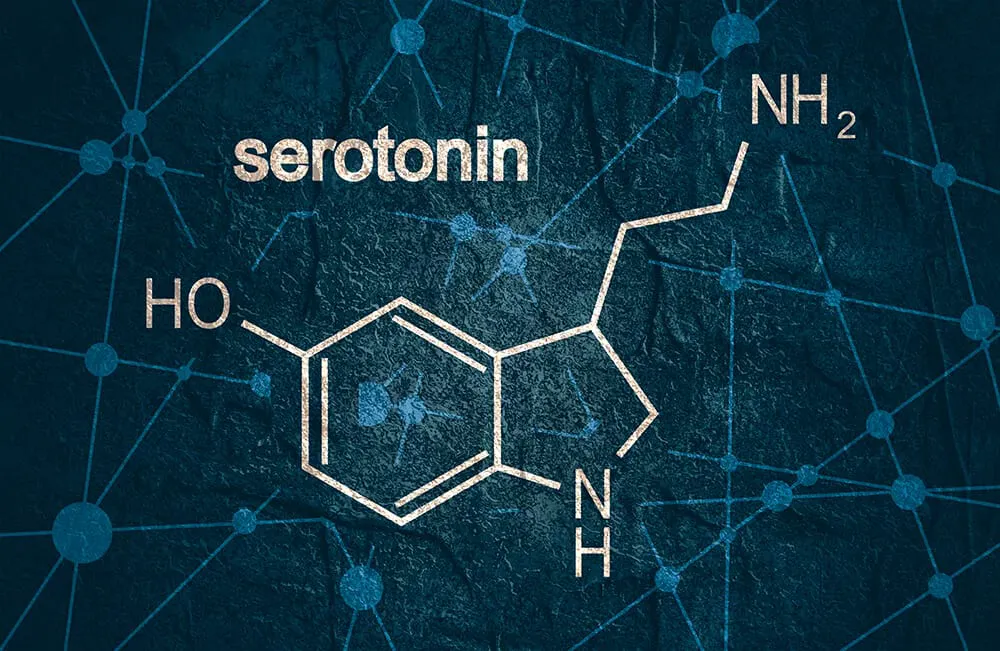
A Comparative Look at How Orgasm, MDMA, 5-HTP, Kanna, and Cannabis Affect Our Feel-Good Neurotransmitter and Overall Well-Being
Serotonin is a vital neurotransmitter that plays a significant role in regulating our moods, emotions, and overall sense of well-being. Often called the "feel-good" chemical, serotonin influences everything from our appetite and sleep patterns to our stress response and social behavior. When our serotonin levels are balanced, we tend to feel calmer, more positive, and emotionally stable; conversely, low or dysregulated serotonin can contribute to feelings of depression, anxiety, and other mood-related challenges.
Because serotonin is so influential in determining how we think and feel, many people explore various ways of modulating it—ranging from natural lifestyle habits to specific substances or supplements. In comparing five major factors—orgasm, MDMA, 5-HTP, Kanna, and cannabis—we gain insight into the different mechanisms and magnitudes by which serotonin can be boosted or regulated. Each option carries unique benefits, risks, and durations of effect, highlighting how personalized and nuanced our relationship with serotonin can be. Understanding these distinctions is key for anyone looking to responsibly support their mental health and overall well-being.
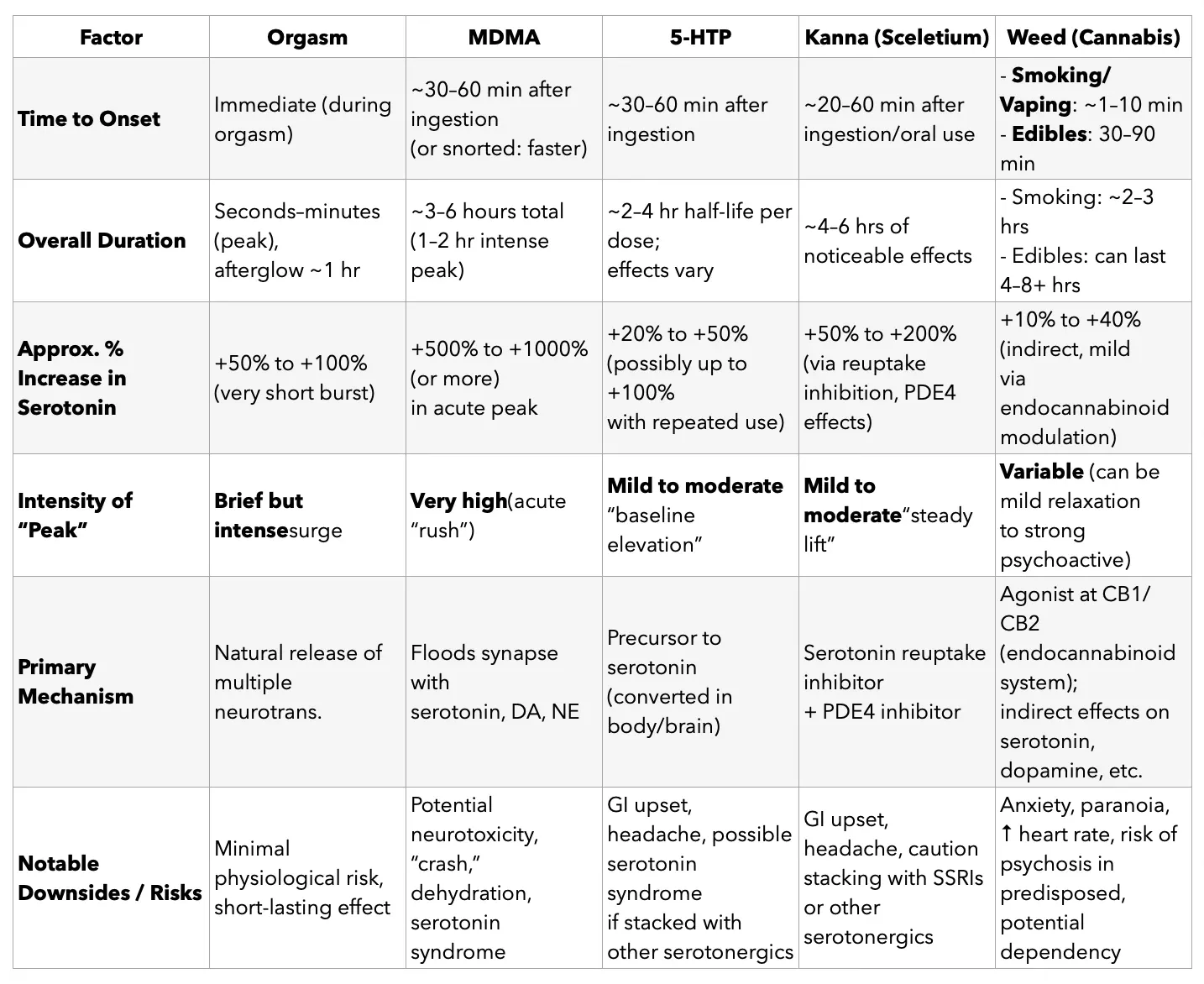
Below is an expanded comparison table including orgasm, MDMA, 5-HTP, Kanna, and now weed (cannabis)—with rough guesses on serotonin increase percentages, typical onset, duration, mechanisms, and potential downsides. Note: The percentage values are best approximations, not exact data from head-to-head studies. They're intended as very rough, illustrative estimates.
Quick Reference Table
1. Orgasm
Mechanism: Involves a rapid release of dopamine, oxytocin, endorphins, prolactin, and a modest bump in serotonin.
Approx. Serotonin Increase: Roughly +50% to +100% for seconds to minutes.
Duration: Very short peak; afterglow can last minutes to ~1 hour.
Key Point: Powerful but fleeting. Brain chemistry quickly returns toward baseline.
2. MDMA (Ecstasy / Molly)
Mechanism: Forces a massive release of serotonin, dopamine, norepinephrine.
Approx. Serotonin Increase: Can be +500% to +1000% (or even higher) at peak.
Duration: About 3–6 hours total, with 1–2 hours of peak effects; followed by a "comedown."
Key Point: Extremely high surge; unsustainable. Can cause depletion and potential neurotoxicity if misused.
3. 5-HTP
Mechanism: Precursor to serotonin; the body converts it as needed, gradually raising serotonin availability.
Approx. Serotonin Increase: Typically +20% to +50%, possibly up to +100% with repeated dosing.
Duration: Each dose has a 2–4 hour metabolic window, but multiple doses can maintain a mild elevation.
Key Point: Gentle, steady "building block" approach—no big "rush," but can help boost baseline over time.
4. Kanna (Sceletium tortuosum)
Mechanism: Serotonin reuptake inhibitor (SRI) + PDE4 inhibition, leading to prolonged serotonin signaling and potential mood elevation.
Approx. Serotonin Increase: Around +50% to +200% (a modest-to-moderate elevation).
Duration: Effects often last 4–6 hours.
Key Point: More sustained than orgasm, less extreme than MDMA. Potential synergy but also risk if combined with other serotonergics.
5. Weed (Cannabis)
Mechanism: Primarily endocannabinoid system (CB1, CB2 agonism), but indirectly influences dopamine, GABA, glutamate, and can mildly affect serotonin levels.
Approx. Serotonin Increase: Possibly +10% to +40%, depending on strain, dose, individual chemistry. Not as direct or potent on serotonin as MDMA or SSRIs.
Duration:
- Smoking/Vaping: Effects can last ~2–3 hours (peak in the first hour).
- Edibles: Onset 30–90 min, total effect 4–8+ hours.
Key Point: Subjective experience varies widely by dose, THC/CBD ratio, and user tolerance. The serotonergic effect is generally milder and overshadowed by THC's main psychoactive effects.
Important Notes & Caveats
Very Rough "Percentage" Numbers
These percentages come from piecemeal research, animal studies, indirect markers (like cerebrospinal fluid measures), and anecdotal reports. They are not exact or directly comparable from a single study.
Short vs. Sustained Increases
- MDMA and orgasm can generate high acute spikes, but they're relatively short-lived.
- 5-HTP and Kanna yield milder yet more sustained effects (especially if dosed consistently).
- Cannabis's serotonergic effect is secondary to its main cannabinoid pathways, so the increase is less direct and typically moderate or mild.
Other Neurotransmitters
- Serotonin is just one part of the puzzle. MDMA also affects dopamine and norepinephrine significantly. Orgasm triggers large spikes in dopamine, oxytocin, etc. Cannabis influences endocannabinoid signaling, which indirectly impacts many neurotransmitters.
- The subjective experience (euphoria, relaxation, anxiety relief, etc.) depends on where in the brain these chemicals act, plus synergy with other systems.
Risks & Side Effects
- MDMA: Potential for neurotoxicity, dehydration, electrolyte imbalance, and a significant "comedown."
- 5-HTP & Kanna: Possible GI upset, headache, or risk of serotonin syndrome if combined with other serotonergics (SSRIs, MAOIs, etc.).
- Cannabis: Anxiety, paranoia, tachycardia, potential psychosis in predisposed individuals, dependency issues.
- Orgasm: Generally low physical risk, though it's obviously short-lived and not a 24/7 mood solution.
Not Medical Advice
This table is informational and not a substitute for professional medical guidance. If considering any supplement or substance—particularly those with serotonergic activity—consult a qualified healthcare provider.
Bottom Line
- MDMA delivers the largest short-term serotonin surge by far (hundreds of percent), but with notable crash and safety concerns.
- Orgasm has a brief but intense multi-neurotransmitter spike (including some serotonin).
- 5-HTP and Kanna provide milder, longer-lasting increases; less dramatic euphoria, but more stable.
- Weed exerts its main effects via cannabinoid receptors, only modestly influencing serotonin compared to the others—but can still have noticeable mood and relaxation benefits, depending on dose and user sensitivity.